
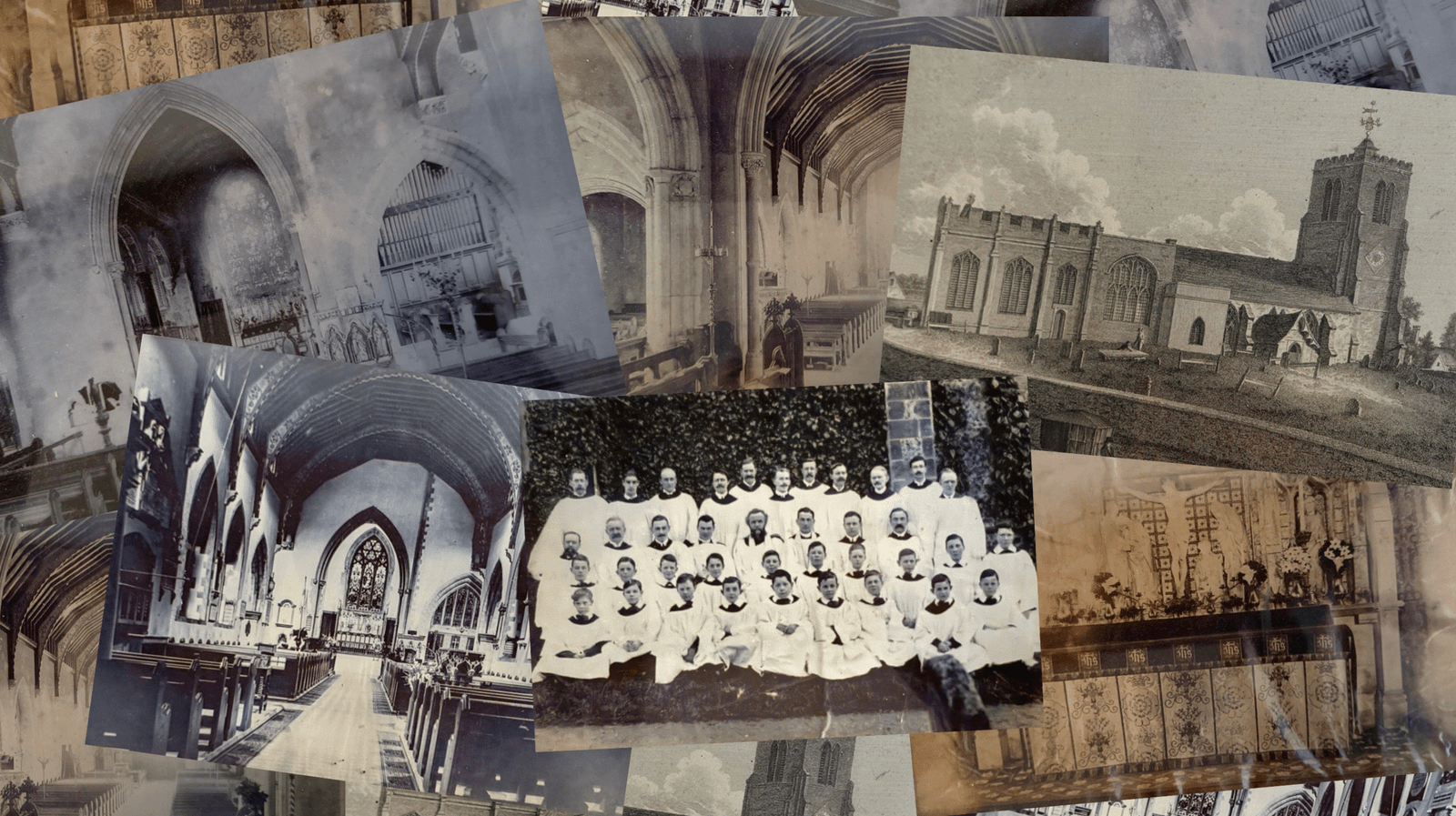
Worship in Hatfield for Over 1000 Years
The Parish of Bishop’s Hatfield has a story that stretches back over a thousand years. Christian worship has taken place in Hatfield since at least the 10th century, when King Edgar gave land here to the Benedictine monks of Ely, who dedicated their monastery to the Saxon princess, Etheldreda. In 1108, the Bishop of Ely took over the manor and the parish name “Bishop’s Hatfield” still echoes this historic link today.
St Etheldreda
Our older church, St Etheldreda, sits near Hatfield House and has been a place of worship since the 13th century. While little remains of the original medieval building, you can still see signs of its long and layered history.
In the 15th century, the church tower was built by Cardinal Morton, and not long after, the original 13th century Brocket Chapel was rebuilt. The Salisbury Chapel followed in 1618, around the same time Hatfield House was completed nearby. Then in the 19th century, major work was needed to rebuild the nave and roof, the structure had simply grown too tired with age. More recently, the tower was restored, ensuring this historic building continues to serve the community today.
St Luke
St Luke is the younger of the two churches, but it has a story of its own. It began in the late 19th century as a cemetery chapel, built to meet the needs of a growing population in what was then known as Hatfield’s “New Town.” The graveyard at St Etheldreda was nearly full, and a new burial ground was created on the other side of town.
The chapel was opened by the Bishop of St Albans in 1878, with regular services and a dedicated curate a decade later. The local community quickly outgrew the chapel’s original purpose, so in 1893 it was expanded into the full-sized cruciform church we know today. As New Town became part of the main town, St Luke took its place as a fully established church and part of the fabric of Hatfield.
If you’re interested in the finer details, including historical features within both church buildings, we invite you to visit our Visitor Information section where you’ll find more in-depth stories, architectural highlights, and a few surprises from the past.